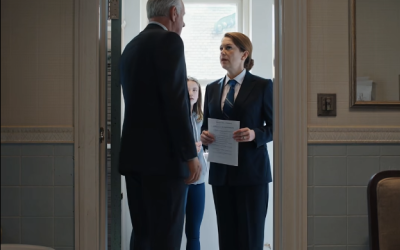
When I was 17, my family moved two states away without telling me. They left a note that said:
“You’ll figure it out.”
Twelve years later, after I finally made it without them, they reached out trying to reconnect. When I was 17, I came back to a completely empty home and a note on the kitchen counter. It was the cruelest thing I’ve ever read. It just said:
“You’ll figure it out.”
I didn’t know what I’d done wrong. I figured they were just tired of pretending they loved me. But the truth was, they had never even pretended. When I was 13, I made a birthday cake for my mom by myself, only to have her call it clumpy. At 15, I tutored my brother through finals. All the while, he called me a know-it-all and slammed his door in my face. At 16, I gave my entire paycheck to my dad so he could cover bills, but got yelled at when I brought it up later after he said I was useless. I was always useful, but never loved. My parents and my brother—my only family—had packed up and moved two states away without telling me.
I found out from the landlord a week later. I had a week to move out because they’d canceled the lease early. I slept at a friend’s house for three nights before I ran out of places to go. Eventually, I was sleeping in the back of a storage unit I rented with the last of my savings. I snuck in and showered at the YMCA, ate peanut butter with a spoon for my breakfast, lunch, and dinner, applied for jobs on free library computers, and pretended everything was okay.
Eventually, I got hired at a diner as a server for the night shift. The manager was gruff but fair. She paid me cash under the table until I could get an ID. She let me nap in the break room once when I nearly collapsed from exhaustion. I clawed my way through it. Bought a prepaid phone, saved every single receipt, watched free YouTube tutorials on finance and goal-setting. The first year, I barely survived, but I made it through.
The turning point came when a regular at the diner offered me a temp job cleaning out office files. It paid triple what I made serving. I said yes. That job led to another and another. I learned quickly, showed up early, and asked questions. By 22, I was freelancing full-time. By 25, I launched a consulting business—just me, a folding table, and a borrowed laptop. By 27, I had five contractors under me, my own office, and a client roster that included companies I used to dream about. And by 29, I was officially a millionaire. Not influencer-millionaire, not fake-it-for-Instagram millionaire—actual savings with a retirement account, no debt, paid-off apartment, health insurance I could afford.
The first time I saw my bank app hit seven figures, I cried.
Throughout those tough years, my family never reached out. Not even once. I saw my brother pop up in a suggested friends list once. He’s married now, still living in the state they disappeared to. I stared at the screen for a long time, wondering if he ever told his wife about me—if he said I ran away or if he said nothing at all. Sometimes I still wonder if it would’ve been easier to hate them. But truthfully, it was never hate. It was heartbreak.
I go to therapy now because I want to stay unbroken. I’ve made a list of people who saved me when they didn’t have to—co-workers, classmates, strangers who showed me what real support looks like. Last week, a podcast interview I did about surviving family estrangement blew up online. It hit a million views in four days. My inbox filled with messages of support, gratitude, strangers telling me I put words to their pain.
And then one email stood out.
The subject line:
“You’re still our daughter.”
It was from my mom. No apology—just a paragraph about hearing my side and how maybe we could talk. Then another message, this time from my brother:
“We miss you. Can we fix this?”
I stared at the screen for a long time before closing the laptop. I sat with it and wondered if healing means looking back or staying forward. I didn’t respond right away. I needed time to process. My therapist, Melissa, suggested I take at least a week before making any decisions.
“Give yourself space to feel whatever comes up. There’s no rush to respond.”
So I did. I focused on work, went to the gym, had dinner with friends—normal stuff. But those emails haunted me. I kept opening them, reading them, closing them again. My mom’s message felt cold, clinical, almost like she was reaching out to a distant acquaintance. My brother’s was shorter, but somehow felt more genuine. I couldn’t stop thinking about them.
After ten days, I decided to reply to my brother first—just something simple. I wrote:
“It’s been 12 years. What changed?”
Then I hit send before I could overthink it.
His response came within an hour. He said the podcast made him realize what they’d done. He claimed he was only 15 when they left me, that he didn’t have a choice, that he’d always wondered about me, that he’d looked me up online a few times over the years, but never had the courage to reach out, that seeing me successful made him proud.
I didn’t buy it. Not completely. If he’d been so concerned, why wait until I was publicly successful? I asked him exactly that. His next email was longer. He admitted that money was tight for them, that my parents’ business had failed, that his wife was pregnant with their second child, that medical bills were piling up.
I felt my stomach drop.
There it was. The real reason.
I didn’t respond for another week. Then my mom sent a follow-up email with old family photos attached—pictures of me as a baby, pictures of us at the beach when I was maybe five or six, pictures of me and Michael building a snowman. Happy moments that felt like they belonged to someone else’s life. At the bottom of the email, she wrote:
“We made mistakes. We want to make amends.”
For Complete Cooking STEPS Please Head On Over To Next Page Or Open button (>) and don’t forget to SHARE with your Facebook friends.